



Introduction
If you’ve ever stopped mid-sentence wondering whether it’s combatting or combating, you’re not alone. Both spellings appear online, in articles, and even in business communication—so it’s no surprise people second-guess themselves. English spelling rules can feel inconsistent, especially when you’re dealing with words that double consonants in some forms but not others. In this article, we’ll break down the correct spelling, explain why the variation exists, and help you understand how to use the word confidently. Whether you’re writing an academic paper, a blog post, or professional documents, knowing the right form keeps your message clear and polished.
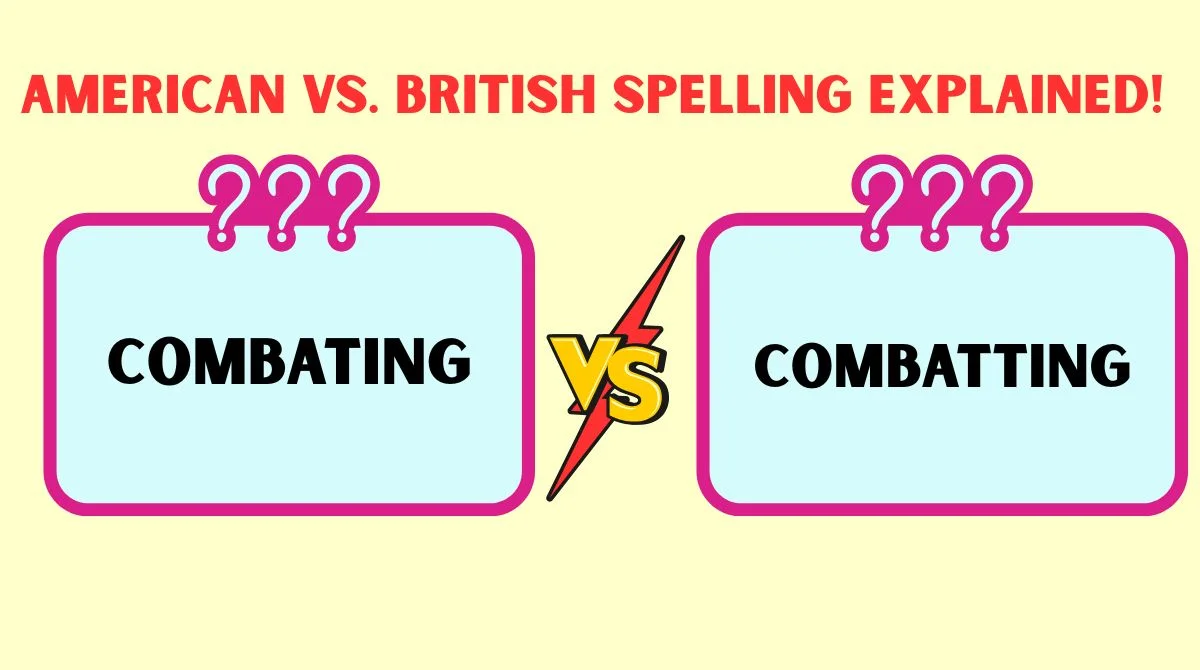
Which Spelling Is Correct—Combatting or Combating?
In Combatting or Combating ,Officially recognized and widely accepted spelling in modern English is combating. Most major dictionaries—including Merriam-Webster, Oxford, Cambridge, and Collins—list combating as the standard present participle of “combat.” It follows a typical rule: when a verb ends in a single consonant and the stress does not fall on the last syllable, the final consonant isn’t doubled before adding “-ing.”
For example:
-
visit → visiting
-
benefit → benefiting
-
target → targeting
“Combat” behaves the same way because the stress falls on the first syllable: COM-bat, not com-BAT. That’s why we don’t double the “t.”
So why does combatting appear so often? Mostly due to spelling confusion. English includes many words where the final consonant is doubled before adding “-ing”—especially when the stress falls on the last syllable, such as “begin → beginning” or “forget → forgetting.” This leads some writers to assume “combat” follows the same pattern, even though it doesn’t.
Because of this, “combatting” shows up in informal writing or in older texts, but it’s not considered correct in modern usage. If you want professional, accurate spelling, combating is the one to use.
Why “Combatting” Appears—Understanding Spelling Patterns
Even though combatting isn’t standard, understanding why people use it helps reinforce the correct choice. English spelling rules can feel inconsistent, and many writers rely on visual familiarity rather than grammatical logic. Since other verbs double their final consonants, it’s easy to assume “combat” works the same way.
Verbs like “begin,” “omit,” and “admit” double consonants because of the stress pattern—they’re pronounced with emphasis on the final syllable. By contrast, “combat” places emphasis on the first syllable, so it doesn’t follow that rule. But unless someone has studied English phonetics, that distinction isn’t intuitive.
Another contributing factor is UK vs. US spelling perception. Many people assume “combatting” is British and “combating” is American—but in this case, both regions use combating almost exclusively. When “combatting” appears, it’s usually due to a writer’s assumption rather than regional spelling rules.
Autocorrect tools, older documents, and user-generated content also contribute to the confusion. While modern spell-checkers will flag “combatting” as incorrect, older versions didn’t always catch it. This means the variant continues to appear, even though it’s not the preferred form.
Understanding these patterns helps writers avoid mistakes and feel more confident choosing the correct spelling in any context.
How to Use “Combating” Correctly in Sentences
The easiest way to remember the correct spelling is to see it used in real examples. Because “combating” is used across a wide range of topics—health, politics, education, business, and social issues—it’s a versatile verb that appears in many types of writing.
Here are some examples:
-
“The organization is combating climate change through community projects.”
-
“Healthcare workers are combating the spread of seasonal illnesses.”
-
“She’s dedicated to combating misinformation online.”
-
“Local leaders are combating rising crime rates with new initiatives.”
-
“The school launched a program aimed at combating bullying.”
You’ll notice that “combating” works smoothly in sentences about action, problem-solving, or addressing challenges. It pairs naturally with supporting terms like “reducing,” “preventing,” “fighting,” and “tackling.”
If you plug “combatting” into any of the sentences above, it looks visually clunky—and more importantly, it isn’t the standard spelling. Whether you’re writing for an online audience, academic setting, or workplace communication, using combating ensures clarity and professionalism.
When You Might Still See “Combatting” in Use
Although combating is correct, you may still occasionally encounter combatting in certain contexts. Understanding why helps prevent confusion.
Older Publications or Historical Texts
Some writers in the past used “combatting” due to inconsistent spelling guidelines. English spelling wasn’t always standardized, so older books and articles may reflect different conventions.
Unedited Online Content
Blogs, forum posts, and social media often contain spelling variations because they’re written quickly or informally. Many users simply type what “looks right,” leading to variants like “combatting.”
Stylistic Preference
A small number of writers choose “combatting” because they prefer the visual symmetry of double consonants. While stylistic, this choice isn’t supported by standardized English rules.
Autocorrect Issues
Some outdated writing tools or regional spell-check settings may not catch the incorrect form, causing accidental usage.
Assumptions Based on Similar Words
Writers who are familiar with “setting,” “cutting,” or “betting” assume “combatting” follows the same pattern, even though the stress pattern of the word doesn’t justify doubling the consonant.
While you may see “combatting” in these places, it’s best to use combating in any formal, optimized, or professional writing.
Why Correct Spelling Matters in Online and Professional Writing
In everyday conversation, spelling rarely affects communication—but online, spelling accuracy matters more than many people realize. Using the standard form—combating—supports clarity, professionalism, and search engine optimization.
Here’s why choosing the right spelling is important:
SEO and Search Visibility
Search engines prioritize keywords with high-volume, standardized spelling. Since “combating” is the correct and commonly searched version, using “combatting” can reduce your visibility.
Professionalism
Whether you’re writing reports, articles, or proposals, incorrect spelling can make readers question credibility. Choosing “combating” reflects attention to detail.
Consistency Across Regions
Both American and British English agree on “combating.” Using the wrong variant can confuse readers from both regions.
Reader Trust
Accurate spelling helps maintain authority, especially when discussing sensitive topics like combating disease, combating inequality, or combating environmental issues.
Writing Flow and Readability
The single “t” creates a cleaner, more natural flow for readers, keeping the sentence visually balanced.
These reasons make it clear that choosing combating over combatting isn’t just about grammar—it’s about effective communication.
Conclusion
Understanding whether to use combatting or combating doesn’t have to be confusing. The standard and correct spelling is combating, based on English rules about stress patterns and consonant doubling. While “combatting” appears occasionally in informal writing or older works, it isn’t recognized by modern dictionaries or professional style guides. By using “combating,” you ensure clarity, accuracy, and professionalism in all types of communication. Whether you’re writing about social issues, health initiatives, or environmental efforts, sticking with the correct form strengthens both your message and your credibility.
FAQs
Is “combatting” ever correct?
No. “Combatting” isn’t the standard spelling. The correct form recognized by dictionaries is combating.
Why doesn’t “combat” double the “t”?
Because the stress falls on the first syllable, there’s no need to double the consonant before adding “-ing.”
Do American and British English spell it differently?
No. Both use combating as the correct form.
Does using “combatting” affect SEO?
Yes. Since “combating” is the established spelling, using the incorrect form can reduce search accuracy and visibility.
Can I use “combatting” in informal writing?
You can, but it’s not recommended. Most readers recognize “combating” as the proper spelling.
